If you're into videogames and often read about them, you might have noticed the recent trends and buzz-words. What I want to talk about here is a bunch of terms being used very frequently: 'hardcore', 'core' and 'casual'.
The first one is a pretty common word, and within the videogames world it has been used for a while: 'hardcore gamers' generally refers to people who have a passion for videogames and have been playing them a lot for a long time. 'Hardcore games' is also widely used to define videogames that might be too hard to get into unless you have a good experience with the genre they belong to.
I think the word 'core' is of much more recent inception (in the videogame industry) than 'hardcore', and may be a derivative of it. By my understanding, a 'core gamer' is a softer 'hardcore gamer', not as passionate and as experienced, but still into games; another interpretation could be that 'core gamers' are those who enjoy 'core games', i.e. games with traditional mechanics and concepts, possibly belonging to a well defined and consolidated genre. If you ask me, these terms don't make much sense, but I can't find a better definition for the term.
Lastly, there's a word which has apparently reached its top popularity today: the word 'casual', when attached to a gamer, means that the person doesn't play games very often, certainly isn't passionate about them, nor is knowledgeable of the videogame industry, but still contributes to the overall market. The jump from 'casual gamers' to 'casual games' is relatively short, as I understand that games may be named so when they're enjoyed mostly by 'casual gamers', and minimally by other types of gamers. Those who have been following the industry in the last few years might draw a parallel with the terms 'non-gamers' and 'non-games'.
What do all these terms have in common, aside from videogames? The Wii console, which has brought them all together in a lot of videogame discussions among the members of the game world (developers, publishers, reviewers and fans alike). Well, 'hardcore' used to be thrown around a lot more a couple of years ago, not as much today since it seems to have been gradually replaced with 'core'. Why did it happen? Surely because of how said console has been marketed since its launch; I'm not saying the term 'casual games' was invented along with the Wii (reports of its use fall back to at least year 2000, if I remember correctly... how's that?), but it's certainly been growing in popularity since then.
The matter of 'casual games' is still a relevant one: as the world faces a financial crisis, game developers and publishers need to understand market trends the best they can. I know I couldn't handle it well.
Showing posts with label genres. Show all posts
Showing posts with label genres. Show all posts
12/02/2009

18/01/2009
Dragon Quest
 I'm very fond of the 'JRPG' videogame genre: for those who don't know what it is, it's the class of Role-Playing Games that are developed in Japan. This distinction has been made because, compared to classic, 'western' RPGs like Dungeons & Dragons (now often called 'WRPGs'), these games have a generally different 'feel', due to their design being based on different priorities. I'm not going deeper into this, at least not now.
I read that the first electronic RPG to be published in Japan was some Dungeons & Dragons based game; Dragon Quest is surely the most recognized though, and now it is a well-established series.
What kind of game is Dragon Quest? To put it as simple as possible: the main series of games (there are other games based on it which may cover other genres) usually has you controlling an adventurer in a fantasy world with medieval setting, magic and monsters. In some of the episodes your objective is clear from the start: you're some kind of hero who sets on a quest to slay some demon and bring peace to the world. You may get help from other game characters, who may accompany you in your journey and aid you in battle.
Your travels involve going from town to town, castle, 'dungeon' (i.e. a place with monsters and treasure), in search of items that will help you in your quest, gaining experience from fighting against beasts, monsters and demons. You can engage battles randomly, or have pre-set encounters with stronger enemies: fighting takes place in a different screen than that which displays your exploration, you take turns to plan your battle actions (and possibly those of your companions) and watch the two sides exchanging blows and spell-castings. Winning a fight may net you experience points (which make you stronger), Gold (the game's currency) and useful items. You may use Gold to buy stronger equipment and healing items, which make the battles easier.
The farther you go in your travels, the stronger your enemies become, so it's important to get experience and better equipment to survive and get to the last battle strong enough to win. These games have a lot of strategy to them, and they last quite long compared to action games (they also need a longer development time to balance things just right). This is more or less what all Dragon Quest games are about; of course, each game has its own story and peculiarities which make every episode enjoyable and fun to play.
Yes, they're fun to play indeed! Provided you do like some strategy in videogames, and don't mind the fact that the game mechanics feel somewhat 'archaic' (the series has about 22 years upon its back), you'll find they give a great sense of adventure and rewarding 'growth'.
Too bad that Dragon Quest isn't nearly as popular outside Japan as it is there. Fortunately, thanks to improved distribution and various remakes of the older episodes, they're getting some visibility even in Europe. The next game coming out for the series in the USA and Europe is Dragon Quest V, one of the episodes which were never released in a language other than Japanese. I've never played the first 3, maybe I should try importing the USA versions.
16/01/2009
Retro Gaming
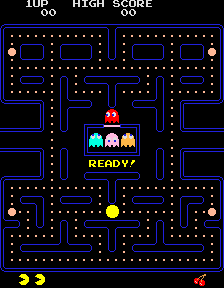
Retrogaming may be generally seen as the nostalgic attachment that long-time gamers have towards older videogames. I think it's much more than that.
First of all, while 'veterans' are the main target of the retro-fever (in any field), there's always a good number of other people who can catch it: after all, while technology advancements have made old videogames look obsolete, well-made, enjoyable games are still enjoyable now. So newcomers to the electronic entertainment world can appreciate old games as well, especially when they can buy them at a fraction of the price gamers had bought them back then, if not for free.
Moreover, even if the history of videogames is relatively short, there are some genres which have been abandoned, and you can hardly find any new games of that genre anymore (assume you've found one by chance and liked it); then you find out that those kind of games were all the rage 10 to 20 years ago, and may be lucky enough to find means to play them.
Lastly, I think Retrogaming has a little more charm than that of nostalgia; because of technical progress, the focus has changed greatly in game development, and not necessarily for the best. Sure, back then developers struggled to make enough figures move on the screen at the same time, or fit all the game on a tape/cartridge/floppy disk, and we don't have to go back to that anymore; but as it often happens, progress also makes other issues become more important, in this case a realistic, consistent, believable virtual world in which to play, ensuring a long-lasting entertainment period for a fair price, an accessible, non-clunky interface and so on. People tended to pass on such things in the past because they didn't even know they could get better; that, and also because good videogames were very refined within their own limitations (because having strong limitations in a creativity medium can have its advantages).
Because of this charm, a recent trend in games has pushed towards 'retro' style features: things like blocky graphics and low-fi sounds are certainly mostly for nostalgic players, but also simpler game levels, shorter but carefully designed worlds and resurrected genres make for a good offer to everyone who wants entertainment.
15/01/2009
Of Genres and Types - Part 2

Continues from previous post
Two aspects come to my mind in regards to the classification of interactive simulation games in general, videogames in particular, from the point of view of a player: the first being the game's outline, the second being the required skills.
The outline of a videogame (I can't find the right words, it's something like the game's concept, but not considering the mechanics) is what is generally understood at first glance by an uneducated/inexperienced player: 'in this game you have to shoot down aliens to save the human base', 'you have to match items of the same color as fast as possible, to make the most points'. See it as the shortest summary of a game that doesn't use genre definitions or references to other games. An outline doesn't usually specify how the game is played, but is often the primary draw for a casual buyer.
Regarding required skills, what I wanted to say is just that interactive games have a certain balance of 'action' and 'strategy'. An 'action game' is one where you have to think little, but fast: this translates to good reflexes and the ability to quickly acknowledge your situation in the simulated world. A 'strategy game' has you thinking about your next moves most of the time, giving you a reasonable (if not unlimited) period of time to plan your actions.
Pure 'action' and 'strategy' games are rare, as most videogames have a healthy mixture of both: this is both because extremisms can make a game not fun to play (becoming a chore to play because of repetitive mindless shooting or too complex resource management), and because accessibility usually suffers from it. Incidentally, Action Games and Strategy Games are also two macro-genres for videogames (although typically they're not used as a dichotomy).
That's all for now. Maybe I'll get back to this topic later on.
13/01/2009
Of Genres and Types
 Nowadays videogame experts, as well as a good number of occasional players, know about the main "genres" of games that you can find: it's a very simple classification method which helps a person decide which games s/he might like to play.
The list of videogame genres expanded time by time, thanks to new games which became very popular thanks to their innovative gameplay ideas (often helped by newly acquired technologies). This list, complete with genres and sub-genres, hasn't been growing much lately, simply because:
- a lot of games have been created, and it's getting harder and harder to come up with a genre-defining videogame (i.e. comes up with entirely original rules and becomes popular enough)
- lately technology advancements haven't been significant enough to help in creating new playing mechanics (we're talking about things like realtime 3D rendering, physics processing and so on)
The reasons for making an interactive videogame rather than another kind of game may be numerous. One is to use the elaborating power of a computer to simulate an opponent (or many) in a known game (from board games to sports); another one is to help the player by simulating the experience of a game or another entertaining action on a screen, experience for which the player would get help from a computer (mixing and placing cards for Solitaire, playing quiz), or which the player wouldn't be able to have (driving an F1 car or a plane, shooting soldiers down without having to kill people... I didn't specify which kind of experience; it's just an example anyway, I'm not saying people would like to experience killing other people).
Another reason to make a videogame is to create an entirely new interactive experience which wouldn't be possible in reality: these range from games like Tetris (similar to Pentomino, but the game simulates endlessly falling pieces to place in order and clear before too many of them fill the board) to science-fiction-inspired games (commanding a spaceship, exploring alien-inhabited planets), to completely irrational games which may or may not even have a clear goal the player has to pursue.
Continuing on Part 2...
Subscribe to:
Posts (Atom)